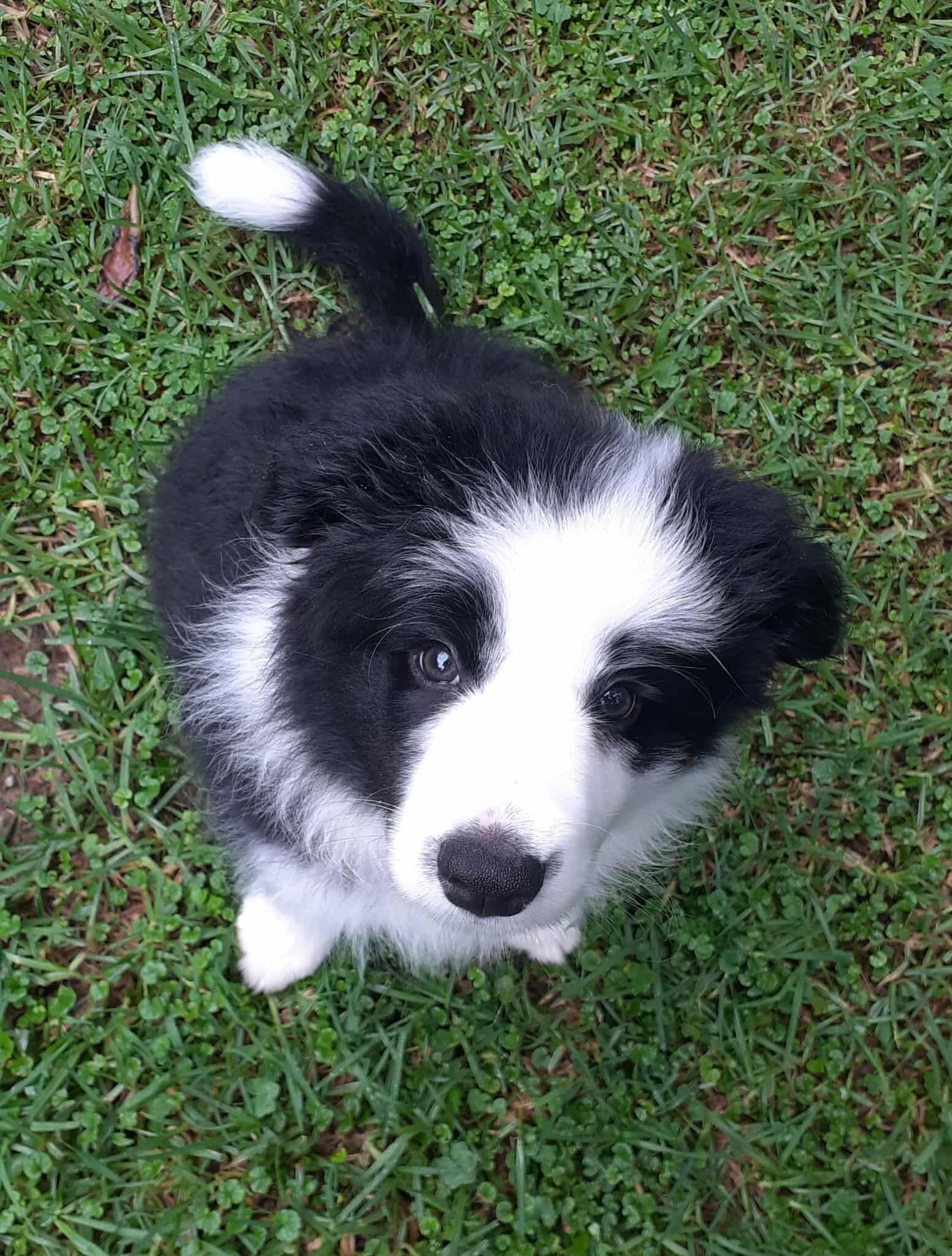
This information refers to puppies, but the principles are the same regardless of your dog’s age, the main difference being that adult dogs can “hold on” for longer. If your adult dog, who is toilet trained, has started having accidents in the house, please get a thorough vet check now. Sometimes a physical problem (such as urinary tract infection) or some medications can cause increased urination, so this needs to be ruled out first.
Puppies are likely to need to go to the toilet:
Frequency of the toilet breaks will depend on:
Take your puppy out more often than you think they need to go, then gradually increase the time between toilet breaks as they get older and are more physically able to hold it longer. Having a dog who is reliable with toilet training for their whole life is well worth the effort for the short time you will need to spend training them now.
You need to establish a regular routine, ideally taking your dog out through the same door each time, to the same area (most dogs will choose a preferred toileting spot in the yard). Puppies develop a preference for toileting on a particular surface, for most people that’s grass, however if you choose a different surface that’s fine. Go outside with your dog, it’s a “supervised” toilet break. This means you know that your dog has “been” and gives you the opportunity to praise them for making a good choice. Don’t just leave the door open and hope for the best, be there to make sure! Ensure you clean up pooh daily, apart from obvious hygiene reasons, it also encourages your dog to go to the same clean area, rather than spreading it around the yard.
Don’t stay outside for an hour hoping your dog will go. If you are going outside for the purpose of a toilet break as opposed to playing with or training your dog, just hang around with them for 3 or 4 minutes, be boring, don’t interact with them, let them go off and sniff and hopefully go to the toilet. If they go, that’s great, praise and bring your “empty” puppy back inside. This is the time to introduce a verbal cue if you would like to, so your puppy will learn to go on request (very useful before car trips or if they need to be indoors for some time). Choose something you will feel comfortable saying in public and say your chosen word or phrase quietly and calmly as they relieve themselves.
If they don’t go, come back inside with them and your puppy now needs to be in one of 4 situations until the next toilet break which may be in another 20 minutes or so:
At night-time, the more settled they are, the more likely they will be to sleep through; if they’re restless, they’re more likely to need to go to the toilet. Whilst it won’t suit everyone, allowing your puppy to sleep on the bed with you MAY aid in reducing the need to go to the toilet during the night, if this is where they are most settled. A crate or playpen beside your bed is another option, so you can hear if they wake up, and you can quickly take them outside. If they are isolated from you at night, and unsettled, this MAY prolong toilet training for night-time. An ensuite or laundry where your pup can move away from their sleeping area to toilet is another option, either with a toileting area (wee mats) or just clean up in the morning.
As your puppy gets older, they will be able to hang on for longer and you’ll get an idea of their patterns. The more consistent you are, the quicker they will learn. Most dogs should be reliable by about 6 months, there may still be the occasional mistake, so don’t let your guard down too early. Don’t assume your puppy is toilet trained because there haven’t been any mistakes in the house for 2 days, keep up the routine to ensure there’s no relapse; “assuming” they’re toilet trained is one of the most common reasons for going backwards.
Do not under any circumstances punish your puppy for going to the toilet inside as they will likely learn they get in to trouble for going to the toilet in front of you (this is the last thing you want as you need to praise them for going in the desired area); and won’t understand it’s the location that’s the problem not the act! If you catch them mid-flow, it’s probably too late, it’s up to you if you let them finish or try to usher them outside.
Sometimes you need an indoor toilet area if your puppy is indoors without you for any length of time. You can try the puppy pads and use the same principles for teaching toileting outside. If using puppy pads, have them in a few locations and gradually decrease the areas they are in, also you may need to put 2-3 pads together to make a bigger “target area”. If possible, it’s best to just concentrate on teaching your pup where you want them to go as an adult. Sometimes teaching 2 toileting surfaces can prolong the learning process, but there are times when you need an indoor area, so that’s fine, just phase it out as soon as possible. Another option is a square of real turf on a tarp inside/on your deck/verandah for example, so you are still teaching the same surface to toilet on. Not always practical, but an option!
Every dog is different in how quickly they learn, but if your puppy has come from a breeder/rescue where they had the chance to move away from their sleeping and eating areas to use grass, you may find your puppy not too hard to toilet train. Puppies who haven’t had the chance to learn this early on may take a little longer. Be patient, provided you are noticing a consistent improvement on a weekly basis, you are on the right track.
| Tags:Puppy Training |